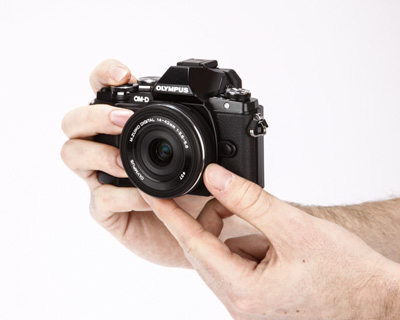
Sunday, March 30, 2014

Gadzuiko! Or, WTF (What The Focalplane) is a Zuiko?

We are going to take a little timeout from the amazing OM-D E-M10 to talk about the Olympus brand of lenses, the Zuiko line. As an aside to an aside, the word Zuiko loosely translated means "auspicious optics" or "auspicious light". Auspicious, indeed.

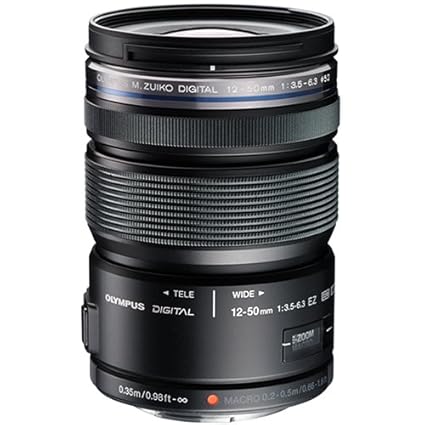
M.Zuiko ED 12-50mm F3.5-6.3 EZ
I opted for the M.Zuiko ED 12-50mm F3.5-6.3 EZ lens to go with my E-M10. Since the MFT crop factor (more on this later) is two, this is the equivalent of a 35mm 24-100mm zoom. The EZ means the lens has the option to use electronic zooming instead of ring-twist. Did I mention it also has a "macro" mode?

In short, I'm as impressed with this lens as I am the E-M10. 

The zoom ring normally twists to accomplish the 4.2x zoom. Slide the ring forward one click and viola! Now it is an electronic zoom, perfect for videos. Press a buttom on the side of the lens and slide the ring forward another click and presto-change-o, you have a 43mm macro lens! Oh, and the lens is also weather proofed - nothing other than the zoom ring, focus ring and mode buttons move on the outside of the lens body.

I can't really speak to the IQ (image quality) too extensively, but to the casual eye this is a heckofa lens. Only downside: no built-in WiFi.

Maybe some sunshine today. I'll be chasing the light...

Saturday, March 29, 2014

Olympus OM-D E-M10 First Impressions, or You Say PASM and I Say PAY-SAM

Wow.

How's that for a first impression?

From the size and weight, to the controls and features, this is one heckofa camera. 

OM-D E-M10
I'm still working on the basics, switching through all the PASM modes (Program, Aperture Preferred, Shutter Preferred, Manual), and figuring out which of two control dials control what. Viewfinder displays make it very clear which mode you have set, and the "rear" control dial controls the aperture or shutter depending on which mode you have set. In addition to the "mode" being displayed, the function to be set is highlighted. Interestingly, the rear dial can also be used to override the shutter speed while in Program mode, providing quick way to customize your shot, but only by increasing the time and not by decreasing. Huh?

The "front" dial almost always controls exposure compensation, but I was confused initially because the display seemed to indicate I had some kind of dynamic exposure compensation going on. Then I realized I had a similar indicator running vertically along the right side of the display. Camera level indicators, dodo. Horizontal and vertical. Why not eliminate that straightening function in post-processing by getting the horizon straight to begin with? Cool...

I've also been through the Super Control Panel, just a one button click away. So, with one click you have access to: ISO sensitivity, Flash mode, Flash intensity control, Sequential shooting/self-timer, White balance, White balance compensation, Picture mode, Sharpness, Contrast, Saturation, Gradation, B&W Filter, Picture tone, Color space, Button function assignment, Face priority, Metering mode, Aspect ratio, Record mode, AF mode, AF target and, whew, Image stabilizer options.

Did I mention built-in WiFi for full remote control, geotagging and sharing?

And, if all that is too much to handle, or you're just feeling lazy, there is always iAuto.

Anyway, we're hoping for some sunshine tomorrow. I'll post some pics from today but everything is pretty flat.

In the mean time, may the sun always be at your back, unless...


Friday, March 28, 2014

Olympus OM-D E-M10

Sony SLT-A55 with Sigma 120mm-400mm zoom telephoto (180mm-600mm 35mm equivalent): 4.96 pounds.

Olympus OM-D E-M10 with Zuiko 75mm-300mm zoom telephoto (150mm-600mm 35mm equivalent): 1.80 pounds.

Need I say more?

Yes, the sensor size is 30% smaller but 5 times larger than my Canon SX50. I can't tell the difference at 100% magnification. Bite me.

Two customizable control dials.

Two customizable function buttons.

Tiltable touchscreen viewfinder.

Adaptive brightness and eye sensor viewfinder.

81-point AF grid that covers the whole frame, autofocus tracking function, group and spot AF, Focus Peaking for accurate manual focusing. Oh, and how about this: focus on left eye, right eye, or nearest eye!

Did I mention built-in WiFi for full remote control, geotagging and sharing?

Most of the features found in the two pro-level OM-Ds, the E-M1 and E-M5. Lacking? Weather proofing. Not a major deal for me.

Just getting started. Much more to come. Excuse me, I need to go photograph...

Thursday, March 27, 2014

95 Years of Surviving and Thriving - Olympus Corporation

There have been many great names in camera history: Kodak (1888), Leica (1913), Olympus (1919), Rolleiflex (1928), Minolta (1933), Fuji (1934), Canon (1936), Argus (1939), Hasselblad and Nikon (1948), Contax (1949), Pentax (1952), Yashica (1953) and much later, Sony (1996) but more significantly in 2006 when they acquired Konica Minolta and rebranded it to Sony. Sony also has a majority share in the Olympus Medical Solutions Inc.,  a joint venture to develop new surgical endoscopes with 4K resolution (or higher) and 3D capability. There are also rumors that some of Sony's lenses are rebranded Olympus lenses.

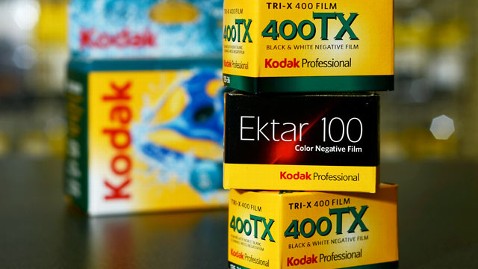
In case you might have forgotten, George Eastman invented roll film, although there are some reports that he purchased the patents from a guy from North Dakota! I've even read that Kodak is a variation on Nodak although there is no confirmation.

In 1913 Ernst Leitz developed a prototype of a camera that used 35mm film, and the photographic world was changed forever. Rolleiflex developed the first practical reflex camera. Minolta (Mechanism, Instruments, Optics, and Lenses by Tashima is perhaps best known for making the first integrated autofocus 35mm SLR camera system. Fuji was primarily a film and printing supplies company until it figured out, unlike Kodak, that digital was the wave of the future. Hasselblad is of course the creme de la creme of medium format cameras and was used on all the Apollo missions.

Nikon - with its full line of interchangeable components and accessories is generally regarded as the first Japanese system camera (remember the F series?).

Contax - first pentaprism.

Pentax - the first practical quick-return SLR mirror. 

So, what is the Olympus claim to fame?

Having designed and manufactured cameras since 1936,  their first innovative camera series created by Olympus was the Pen, launched in 1959. The half-frame format, allowing 72 pictures of 18 × 24mm format on a standard 36 exposure roll of film, made Pen cameras compact and portable for their time. The Pen system design team, led by Yoshihisa Maitani, later created the OM system, a full-frame professional 35mm SLR system designed to compete with Nikon and Canon's bestsellers. The OM system introduced a new trend towards more compact cameras and lenses, being much smaller than its competitors and presenting innovative design features such as off-the-film (OTF) metering.

In 2003 the Four Thirds system standard was created by Olympus and Kodak (and later Panasonic) for digital single-lens reflex camera (DSLR) and mirrorless camera design and development. Unlike older SLR systems, Four Thirds was designed from the ground up to be entirely digital.

Many lenses are extensively computerized, to the point that Olympus offers firmware updates for many of them. Lens design has been tailored to the requirements of digital sensors, most notably through telecentric designs.

The size of the Four Thirds sensor is significantly smaller than for most DSLRs and this implies that lenses, especially telephoto lenses, can be smaller. For example, a Four Thirds lens with a 300 mm focal length would cover about the same angle of view as a 600 mm focal length lens for the 35 mm film standard, and is correspondingly more compact. Thus, the Four Thirds System has crop factor (focal length multiplier) of about 2, and while this enables longer focal length for greater magnification, it doesn't aid the manufacture of wide angle lenses.The image sensor format, generally intermediate between those of larger SLRs and smaller compact cameras, generally gives levels of cost, performance and convenience intermediate between those two classes. 

Ergo - one Olympus OM-D E-M10 on order.

Oh, excuse me, I think I hear the doorbell...

Wednesday, March 26, 2014

The State of the State of the Art

State of the Art: The highest level of general development, as of a device, technique, or scientific field achieved at a particular time.

State of the Art - 1900
Full disclosure: I get a new camera at least once a year and sometimes twice a year. So, bite me. Sometimes I get new golf clubs every year. Bite me again. 

I know some of the "state of the art" products are little more than a new paint job (yes, I'm talking about you, Taylormade). On the other hand, a very good golfer once told me, if you think you need a new putter, you may as well just go ahead and get one. So, it is a thin line we walk between newness just for the sake of newness, and actually getting something of value.

Let's talk about the "state" of my art. I feel like I've made some progress in my ability to make a good photograph. I feel like I understand composition beyond the rule of thirds. When to go large and when to go small. When to break the rules. I'm beginning to come to grips with Photoshop and photo editing software in general and layers and levels and luminosity, oh, my. I've got three workhorse cameras, a Canon SX50 for quick shots and crazy telephoto (1200mm!), a Sony NEX-3N with a 24mm-75mm (35mm equivalent) for wide-angle work and to experiment with mirrorless interchangeable lens cameras (MILC), and a Sony SLT-A55 with a Sigma 180mm-600mm tele for sailing and nature shots. And while Gordon McBride has encouraged me to take some photography classes and just get out there and shoot, I'm afraid there are issues to be resolved.

The "issues" I've been dealing with the past few months are these: 1) to shoot or not to shoot in RAW format (that'll be a separate post), 2) what photo editing and organizing software do I like (another post), and 3) what sensor size is best for the photography I want to do (you guessed it, another post). Oh, and as long as I'm at it, maybe I'll do a little "state of the art" updating!

The jury is still out on RAW format. I'm not convinced it buys me enough to justify the extra storage and post-processing. Time will tell. More work to be done.

I've settled on a combination of Windows Live Photo Gallery, Picasa and ACDSee Pro for importing, organizing and post-processing. More on that later.

State of the Art - 2014
The big news is the soon-to-arrive Olympus OM-D E-M10. Although its appearance is much like an SLR, in reality it is a MILC. In addition, it uses a sensor size that only Panasonic also uses. Smaller than APS-C, but significantly larger than my Canon SX50, it is called Micro Four Thirds, or MFT. Using this sensor allows the camera and lenses to be substantially smaller and lighter than APS-C or full frame cameras. And, oh, the features:
  • 16MP Four Thirds CMOS sensor
  • Twin control dials
  • Built-in flash
  • 8 fps continuous shooting
  • Tilting 1.04M dot LCD touchscreen
  • 1.44m dot LCD viewfinder
  • Wi-Fi allowing remote control and file transfer to smartphones
  • Focus peaking
  • '3-axis' image stabilization
State of the art, indeed.

Tomorrow I'll look at the Olympus company and their reputation in the imaging world...

Tuesday, March 25, 2014

A Little Background

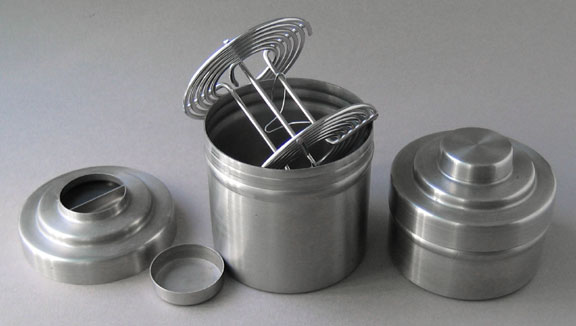
Young children begin exploring their surroundings as soon as they are mobile, and I was no exception. In an old cardboard box shoved way back in the corner of a closet I discovered photographic print trays, a film developing tank, a contact printing frame, and some yellow paper wrapped chemicals. I never did mess with the chemicals - the developing tank and the printing frames were enough to keep me busy. At this point in my life I can't recall what in my imagination those things were, but I spent hours happily playing with them. And the seed was planted.

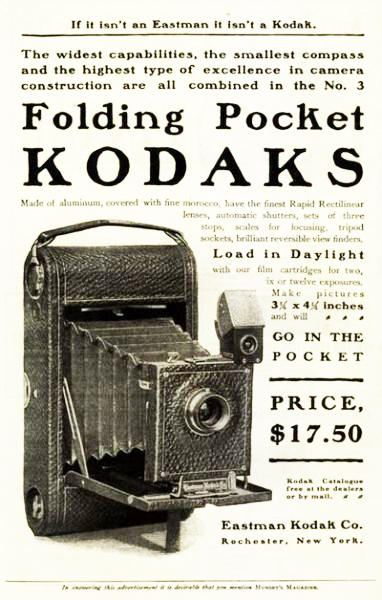
Later my dad begin explaining to me shutter speeds and apertures on a Kodak "Pocket" folding camera, complete with bellows. I loved the aperture click stops and releasing the shutter with different shutter speeds and the remote shutter release cable. Composition was done via a tiny little viewfinder that you had to flip up to fold up the case. Dad let me load and unload the 620 film, making sure to get the tab all the way into the take-up reel, and then making sure to rewind the entire roll until you heard it flapping around inside before opening the back, and then carefully licking the adhesive band to make sure it didn't unroll on you.

In other words, I go way back.

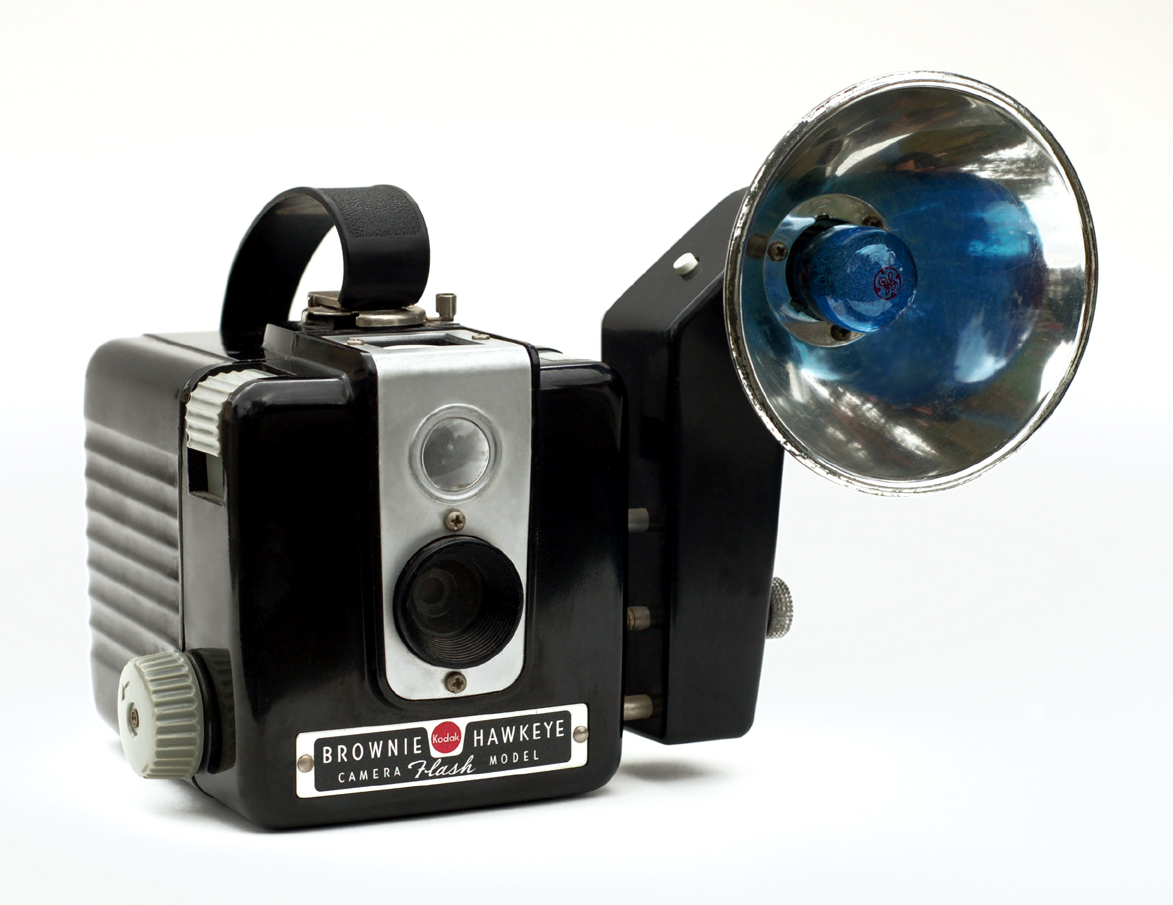
I had my share of Brownie Hawkeyes growing up and I can remember having to buying flash bulbs (Sylvania Blue Dots). Just ask my mom! I have many great "candids" of her, with really nice surprised expressions on her face. In high school I negotiated a reasonable price on a Kodak Retina that the local drug store had in a display case for heaven knows how long, and I had my first 35mm camera.

After my son was born I thought the occasion warranted a "real" camera - an SLR. And, while writing this, the name of it popped into my head - a Petri FT, which can still be purchased on eBay for less than $50. I eventually bought an an enlarger and my own print trays and developing tank. I even loaded my own film for years.

Fast forward a few years and my wife and son and I have moved to Kansas City. The Mechanical Eye in Crown center becomes my favorite camera store and I go through a progression of Minolta and Nikon cameras. Joined the Wyandotte Camera Club. Joined the Photographic Society of America. Became President of the Wyandotte Camera Club. Assisted the Hallmark Photography Boy Scout troop. Started entering photo contests. Won a few (after many, many submissions). Sold all my SLR equipment (three Nikon bodies, multiple lenses) and darkroom equipment. Opted for a Pentax IQZoom while on vacation to Lake Tahoe and realized I have to have some kind of camera. Began the progression of digital cameras. Blah, blah, blah.

Which brings us to today. An Olympus OM-D E-M10 is on its way and should be here before next week. Which is a story all its own, and will be another post.

May the light always be at your back (unless you're taking silhouettes)...
Monday, March 24, 2014

The Mechanical Eye

If you lived in Kansas City during the 1970s, and particularly if you worked at Hallmark Cards and had any interest in photography, you knew about a camera store in the recently developed Crown Center across the street from the Hallmark Headquarters. The name of the store was the Mechanical Eye and they had everything from Nikons to Kodak Instamatics (remember those days?), darkroom equipment to One-Week photo finishing. (Just kidding about the one week business - sometimes you could get stuff back the next day, but there definitely wasn't any One-Hour processing.)

I bought my first name brand SLR there, a Minolta SR-T101, or maybe an SR-T102. Minolta was the first to have a camera with through the lens metering, "... but unlike its competitors it did this at full aperture. Where other manufacturers were struggling with systems where the photographer would have to stop the lens down to check the metering, the Minolta SR-T101 enabled metering to be conducted with the lens wide open. This meant that the meter reading in the viewfinder was always clear and bright, and that the photographic process could be more about inspiration, not perspiration." [from The Rokkor Files]

Eventually I moved up to Nikon, first getting an F2, then an FM and finally an FE. Of course the store had all the accessories, and for Nikon that is a LOT of accessories - right angle viewfinders, motor drives, gazillions of lenses. I had to buy a Domke camera bag just to haul around all that stuff. Three bodies, a 24mm wide angle, a 50mm 1.8, a 105mm macro, 135mm and 200mm teles. I finally sold the whole lot and bought a Pentax IQ Zoom 160, one of the first point and shoot fixed zoom lens cameras. It was so good, however, that I shot my brother's wedding with it and got great results.

I'm not sure when the Mechanical Eye closed its doors, but a great camera store with lots of good memories was lost. The title of this blog is my little homage to that wonderful store...